Recycling and Sustainability at Chessington Skip Hire
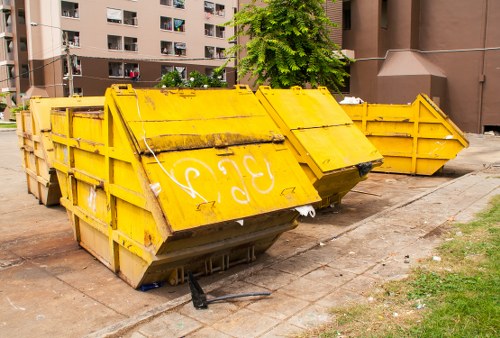
At Chessington Skip Hire we put sustainability at the centre of every service. Our approach to an eco-friendly waste disposal area and a practical, community-focused sustainable rubbish area ensures that skips are not just a temporary holding place for waste but the first step in a responsible resource cycle. We align our operations with local boroughs' separation schemes and national best practice so waste is diverted from landfill, reused where possible and processed through licensed facilities.
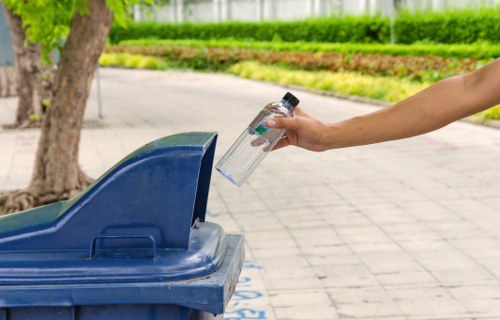 Our mission combines clear targets with day-to-day actions. We have set a company-wide recycling percentage target of 70% by 2030 across all collections, with incremental yearly milestones so progress is measurable and transparent. This target covers reuse, recycling and recovery routes and is supported by staff training, improved on-site segregation and investment in equipment at transfer points.
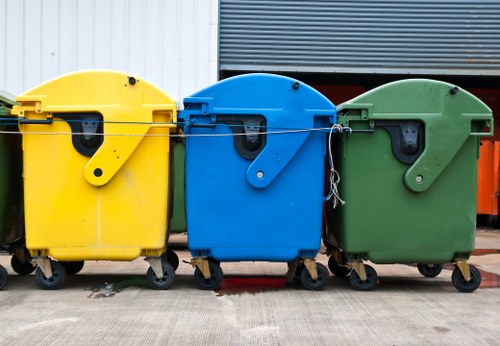
We work closely with the local boroughs — including the Royal Borough of Kingston upon Thames and neighbouring authorities — to mirror municipal approaches to waste separation: dry recyclables, food and garden waste, glass, paper and metals are collected separately where possible. Our teams respect kerbside sorting rules and help customers understand which materials belong in an eco-friendly waste disposal area and which need specialist handling.
Partnerships with charities and community organisations are a practical way to increase reuse. We collaborate with local reuse charities, community social enterprises and renovation projects to divert items such as furniture, working appliances, building materials and clean timber. These partnerships reduce waste volumes, support vulnerable people and keep good materials in circulation.
 To make recycling tangible, we operate clear sorting processes: skips are monitored at collection, heavier separation takes place at local transfer stations and residual waste is routed to licensed treatment facilities. Our frequent routes to authorised material recovery facilities (MRFs) and composting sites help maintain a steady stream of material into the recycling system rather than landfill.
Local transfer stations are a vital link in our sustainability chain. We use a network of local transfer stations and licensed consolidation points across Greater London to ensure materials are consolidated efficiently before onward processing. These transfer stations offer fast sorting, temporary bulking of recyclables and direct access to specialist recyclers for plasterboard, metals, wood and hard plastics.
 Low-carbon vans form another pillar of our low-impact strategy. Our fleet increasingly features electric and hybrid vehicles for short urban runs, and Euro VI low-emission trucks for longer loads. Route optimisation software reduces mileage and idle time, and where electric options are not yet feasible we use low-emission fuels and regular vehicle maintenance to minimise our carbon footprint.
We follow the waste hierarchy — reduce, reuse, recycle — in every job. Typical recycling activities relevant to the Chessington area include:
- Separation and recovery of building materials (timber, metal, concrete)
- Collection of garden and food waste for composting or anaerobic digestion
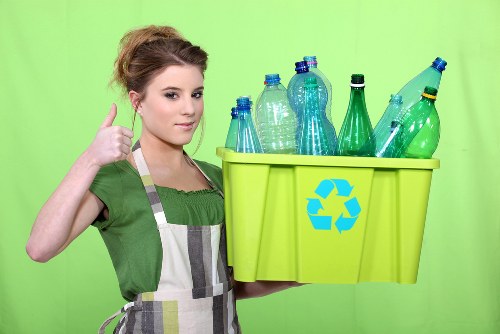
- Glass, paper and plastic consolidation for MRF processing
- Donation of reusable household items to local charities
Community and Borough Coordination
We work in tandem with local council policies — many boroughs in and around Chessington encourage separate food waste collection and stricter dry recycling rules — and we build our internal processes to be compatible with those systems. Our staff receive ongoing training about borough-level collections so we can advise customers on creating an effective sustainable rubbish area at their home or site, without creating contamination that would hinder recycling.
Why choose a sustainable rubbish approach?
Choosing sustainable waste disposal with Chessington Skip Hire means tangible environmental benefits: fewer materials to landfill, lower greenhouse gas emissions from transport and processing, and more local support for reuse initiatives. Our combined strategy of ambitious recycling targets, strong charity partnerships, efficient transfer station use and a low-carbon vehicle fleet creates a practical path from waste to resource.We also run targeted initiatives to capture hard-to-recycle streams and reduce contamination. Examples include separate containers for clean timber and plasterboard on building sites, dedicated channels for metal and electrical equipment, and coordinated collections that match local council collection windows for food and garden waste. These measures increase overall recovery rates and help meet our 70% recycling goal.
By prioritising an eco-friendly waste disposal area on every project and encouraging small changes in how materials are handled on site, Chessington Skip Hire supports local sustainability goals while providing practical, cost-effective solutions. Our emphasis is on clear segregation at source, rapid transfer to licensed facilities and strong social partnerships to extend the life of useful materials.
Takeaway: Chessington Skip Hire is committed to measurable recycling targets, collaborative local approaches, charity partnerships and a low-carbon fleet to ensure that waste becomes a resource wherever possible. Our services are structured so that a sustainable rubbish area is not an add-on but the default way to manage waste responsibly.